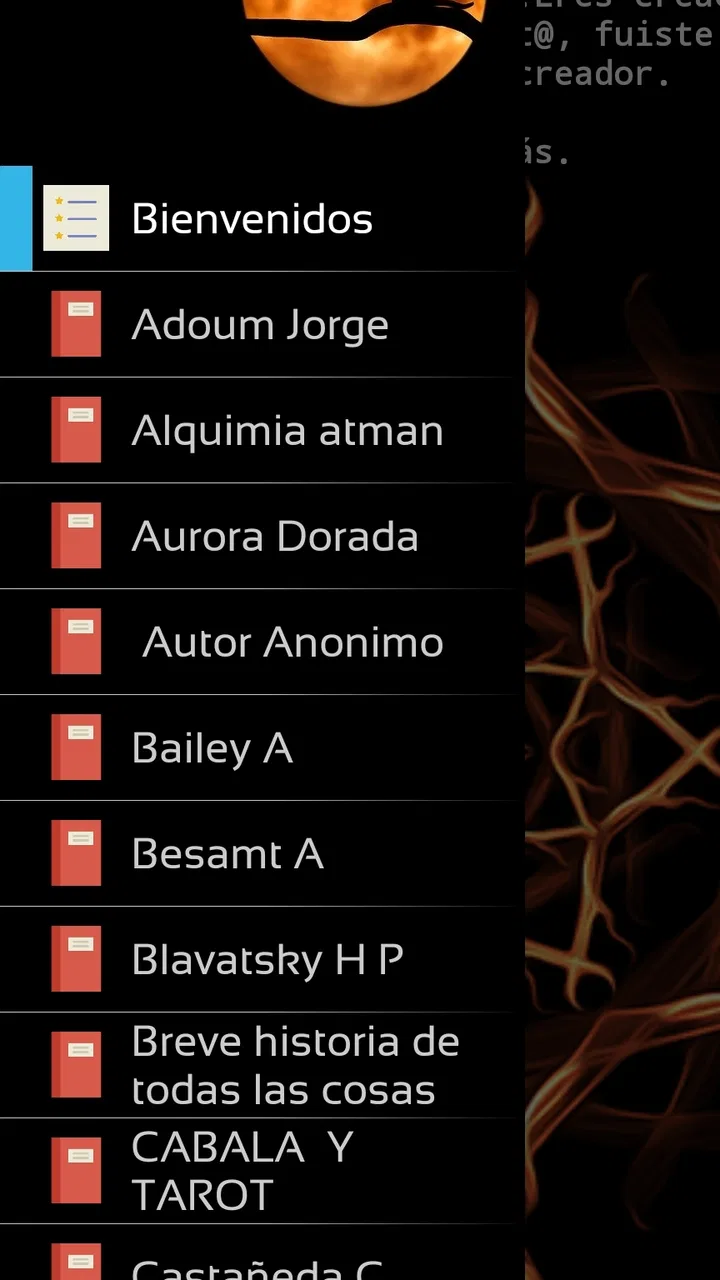
Libros de Ocultismo
- 4.5
- Rating
- 50.00K
- Installs
- Free
- Price

 Analysis by App-foxy
I approached Libros de Ocultismo as a focused reading app rather than a general-purpose book platform. Its purpose is clear: it is aimed at people looking for difficult-to-find books connected with occultism. That narrow focus is both its main attraction and the first question you should ask yourself before installing it. If your reading interests are already pointing toward esoteric subjects, this app may be more useful than a broad library application. If you simply want a large, polished digital bookstore, it may feel too specialized.
The app comes from AppC. and belongs to the Libraries & Demo category. It is free to use, carries an Everyone 10+ content rating, and works on devices running Android 6.0 or later. I would describe it as a discovery tool for a particular kind of reader: someone who is tired of searching through ordinary catalogues and wants a more direct route toward occult literature.
How I Would Decide Whether It Fits
My first decision criterion would be subject interest. The app is not trying to be a universal reading shelf for novels, textbooks, biographies, or mainstream self-help. Its identity is built around occultism, so the value depends heavily on whether that subject is central to your reading habits. The phrase “hard-to-get books” sets an expectation of discovery rather than convenience alone.
You May Also Like

 Blood Strike: 2.5 Anniversary
Blood Strike’s Loadouts Turn Every Drop Into a Tactical Gamble
A close look at Blood Strike’s custom loadouts: how fast access to signature weapons reshapes its battle royale rhythm, rewards preparation, and narrows the gap between fights.

 Pandora - Music & Podcasts
Pandora’s Music Is Easy to Start, but Harder to Recover
Pandora’s strength is its low-effort path from a seed to a station. Its weak spot is how much confidence it asks you to place in connection, setup, and quiet recovery.

 8 Ball Pool
 Is Built on Rivalries, Rematches, and Routine
A close look at the rivalries, rematches, shared routines, and unanswered safety questions that turn a quick pool match into a persistent mobile community.

 Samsung Music
’s Quiet Strength Is Playing What You Already Own
Its reach comes less from spectacle than from dependable access to a personal library. That simplicity is both the app’s strongest retention engine and its ceiling.

 AccuWeather: Weather Radar
AccuWeather Review: A Quick, Clear Forecast for Everyday Decisions
For everyday plans, the best forecast is the one you can understand quickly. AccuWeather makes rain timing, radar, and local conditions easy to act on, with a few trade-offs.

 Hill Climb Racing
Why Hill Climb Racing Still Turns Crashes Into One More Run
A tiny car, a bumpy hill and one more upgrade: Hill Climb Racing keeps resurfacing because its simple chaos makes every near-miss feel personal.
More From Our News Desk



The second criterion is patience. A specialist collection can be rewarding, but it may require more browsing and personal judgement than a mainstream reading service. I would not install this expecting the same streamlined experience as a large commercial bookstore. I would install it when the search itself matters and when I am willing to investigate unfamiliar titles instead of choosing only from popular recommendations.
The third criterion is device compatibility. The application supports Android 6.0 and newer, which covers a wide range of phones and tablets. That makes it approachable for people who keep an older device as a dedicated reading screen. On the other hand, anyone using an unsupported system would need to solve that compatibility issue before the app becomes useful.
I also look at trust signals, while keeping them in perspective. The app has an average rating of 4.5 from around 1.3 thousand ratings, with 15 written reviews and more than 50 thousand installs. Those figures suggest that it has found a real audience, but they do not automatically guarantee that every reader will enjoy its collection or presentation. For a niche app, personal relevance matters more than popularity alone.
Before downloading, I would ask myself a practical question: am I looking for books that are genuinely difficult to locate, or am I merely curious about occultism? The first type of user is likely to understand the app quickly. The second may prefer a broader educational library first, especially if they want historical context, academic commentary, or introductory material from several disciplines.
A Useful Way to Test the App
I would begin with a specific reading goal rather than opening the app without a plan. For example, I might decide that I want to explore ceremonial traditions, symbolic systems, folklore, or historical occult writing. A defined topic gives the search process direction and makes it easier to judge whether the available material is genuinely useful.
A second helpful approach is to keep a simple reading note outside the app. When I find an interesting title, I would record its name, why it caught my attention, and whether it appears relevant to my original goal. This prevents a common problem with specialist collections: saving many intriguing items while losing track of what I actually intended to read.
I would also separate discovery from evaluation. A book appearing in a focused collection does not necessarily mean it is reliable, historically important, or suitable for beginners. I would treat the app as a way to locate material, then judge each work by its subject, age, tone, and purpose. That distinction is especially important when reading about traditions that mix history, belief, symbolism, ritual, and personal interpretation.
Where the App Wins
The strongest advantage is focus. General reading apps often bury specialist subjects beneath bestsellers, popular fiction, and broad categories. Here, the entire reason to open the app is connected to occult literature. That can save time for readers who have already tried ordinary searches and found mostly repeated, surface-level results.
I can also see the app being useful for exploratory reading. Someone who has encountered a reference to a rare occult text may not know where to start looking. A specialist application provides a more natural first stop than a general library, particularly when the title or subject does not fit common retail categories.
Another strength is accessibility through price. Because the app is free, the decision to try it carries little financial risk. That matters for a niche interest where you may not yet know whether the available material matches your expectations. I could install it, browse, and decide whether its focus deserves a place in my regular reading routine without committing to a purchase.
The free model also makes it suitable for occasional users. I would not need to be deeply involved in occult studies to justify trying it. A student researching cultural history, a writer checking references for a fictional setting, or a curious reader comparing symbolic traditions could all use a focused catalogue as a starting point.
Its age rating of Everyone 10+ gives it a relatively approachable profile for older children, teenagers, and adults exploring the subject with suitable guidance. I would still recommend that younger readers approach occult themes alongside a parent, teacher, or trusted adult when the material becomes historical, religious, or emotionally intense. The rating is a useful boundary, not a substitute for judgement about individual books.
Practical Scenarios Where It Makes Sense
Imagine that I am writing a story involving an old esoteric society. I do not need a generic collection of fantasy novels; I need terminology, recurring symbols, and older ideas that are difficult to find through ordinary entertainment apps. In that situation, I would use this app during the research stage, gathering leads and noting which texts deserve deeper checking.
Another realistic scenario would be a quiet weekend reading project. I might choose one unfamiliar subject, browse the available material, and compare several works before settling on one. The app’s value in that moment would not be instant answers. It would be the chance to move beyond the same introductory pages that appear in mainstream searches.
It may also suit a reader who prefers building a personal trail through a subject. Rather than following algorithmic recommendations based on popularity, I could move from one obscure reference to another and form my own route. That is a meaningful advantage for independent readers who enjoy connecting ideas without being guided toward the most commercially visible titles.
For researchers, the app could be a convenient discovery layer, but I would not treat it as the final authority. A serious project still benefits from checking publication context, authorship, translations, historical background, and interpretations in more formal sources. The application is better at helping me locate promising material than at replacing careful research.
Small Habits That Improve the Experience
I would avoid judging the collection after only one search. Specialist catalogues can reward different wording, and an unfamiliar title may be more valuable than a familiar keyword. I would try related terms, historical labels, and broader themes, then compare the results instead of assuming that the first screen represents the entire experience.
I would also read with a two-column mindset: one side for what a text claims, and another for what can be treated as historical or cultural evidence. This is not a criticism of the app; it is a sensible habit for any collection dealing with occult subjects. It helps me enjoy the material without confusing personal belief, literary tradition, and documented history.
Finally, I would use the app in short sessions when searching for a particular work. A focused session is easier to evaluate than endless browsing. If I find several worthwhile books quickly, the app has earned a place in my toolkit. If I keep seeing material unrelated to my needs, I would switch to a broader library or an academic catalogue rather than forcing the application into a role it was not designed to fill.
Where Other Options May Fit Better
The app’s specialization can become a limitation when my needs move outside occult literature. If I want novels, current nonfiction, school resources, audiobooks, or a large commercial catalogue, a general book service will probably be more efficient. Those platforms are built for breadth and convenience, while this application is built around a much narrower discovery purpose.
I would also choose a different option if I needed strong academic organization. A university library, scholarly database, or carefully edited reference source is more appropriate when citations, editions, provenance, and peer-reviewed commentary matter. Libros de Ocultismo may help me discover a text, but discovery and verification are separate jobs.
Readers who want an especially polished reading environment should set realistic expectations. A focused library app can be valuable because of its subject selection, yet that does not mean it will feel like a premium reading ecosystem with every convenience. If my priority is advanced annotation, cross-device reading, extensive synchronization, or a broad range of formats, I would compare it with tools designed specifically around those functions.
There is also a difference between reading about occultism and practicing a belief system. I would recommend the app to someone interested in books and ideas, not as a substitute for personal guidance, mental-health support, medical advice, or professional help. If a text encourages risky conduct or makes alarming claims, I would step back and evaluate it critically rather than treating its presence in a specialist collection as an endorsement.
Beginners may prefer a gentler route. A historical introduction or an annotated overview can provide useful context before moving into obscure works. The specialist focus is appealing once I know what I am looking for, but it may feel confusing if I have no background at all. In that case, I would use a general educational resource alongside the app rather than relying on it alone.
The Cost of Changing From a General Library
Switching from a mainstream reading app to this one is inexpensive in terms of money because the application is free. The real cost is time and adjustment. I would need to learn how its material is organized, develop better search habits, and accept that a niche collection may not provide the same immediate familiarity as a popular bookstore.
There is also a change in how I measure success. In a general app, success may mean finding a recommended title in seconds. Here, success may mean uncovering a work I would never have encountered through ordinary browsing. That process can feel slower, but it may be more rewarding for a reader who values unusual sources over quick, predictable choices.
I would not replace every library app on my phone. I would use this one beside a general reader: the broad service for everyday books and the specialist app for occult-related discovery. That combination avoids the false choice between convenience and depth. It also means I can move to another source when I need modern commentary, a different format, or stronger research tools.
Because the current version is 9.8, I would expect the app to be an established project rather than a brand-new experiment. Still, I would judge it by what I can actually do with it on my device. Version numbers do not tell me whether the collection matches my interests, so the best test remains a short, purposeful browsing session followed by a decision about whether the material is worth returning to.
My Recommendation for the Right Reader
I recommend Libros de Ocultismo to readers who specifically want hard-to-find occult books and are comfortable exploring a focused collection. Its free access, broad Android compatibility, and clear subject identity make it an easy app to try. I especially see value for independent researchers, writers, students of cultural history, and curious readers who have already outgrown basic search results.
I would not make it my only reading application. The narrow subject means that its usefulness rises and falls with my current project. If I want a general library, a polished commercial reading service, or academically verified material, another category of tool will serve me better. That is not a flaw so much as a boundary that should be understood before installation.
My best advice is to approach it with a question, not just curiosity. Choose a theme, search patiently, record promising discoveries, and check important claims against independent sources. That workflow turns a niche catalogue into something practical instead of leaving it as a collection of interesting titles that I never read.
With an average rating of 4.5 and more than 50 thousand installs, the app has attracted enough interest to deserve a fair trial from its intended audience. The number matters less to me than the fit: if occult literature is the reason I am searching, this focused tool is more likely to help than a broad library that treats the subject as an afterthought.
In the end, I see it as a specialist doorway rather than a complete reading home. For the right reader, that doorway may lead to books that are genuinely hard to locate elsewhere. For everyone else, a general library or educational resource will probably be the more comfortable starting point. Install it when focused discovery is your goal, and keep another source nearby for context, verification, and everyday reading.
FAQs for Libros de Ocultismo
01What is Libros de Ocultismo and what does it offer?
Libros de Ocultismo is a comprehensive app that provides a vast collection of occult books and resources. It caters to enthusiasts of mysticism, esotericism, and spiritual studies. The app offers access to rare texts, modern interpretations, and exclusive content, making it an invaluable tool for both beginners and seasoned practitioners seeking knowledge in the occult field.
02Is Libros de Ocultismo free to use or does it have any subscription fees?
Libros de Ocultismo offers a freemium model. While the app is free to download and provides access to a selection of books at no cost, there are premium features available through in-app purchases. These may include access to exclusive content, ad-free browsing, and additional resources that enhance the user experience.
03What platforms support the Libros de Ocultismo app?
Libros de Ocultismo is available on both Android and iOS platforms. Users can easily find and download the app from the Google Play Store or the Apple App Store. The app is designed to be user-friendly and compatible with a wide range of devices, ensuring a seamless reading experience across different smartphones and tablets.
04Does Libros de Ocultismo require an internet connection to access content?
While an internet connection is required to download the app and access some features, Libros de Ocultismo allows users to download books for offline reading. This means that once a book is downloaded, it can be accessed without an internet connection, making it convenient for users to read on-the-go or in areas with limited connectivity.
05Is the content in Libros de Ocultismo suitable for all age groups?
Libros de Ocultismo contains a wide range of content that may include complex or mature themes related to the occult. It is recommended for mature audiences who have an interest in mystical and esoteric topics. Parents should review the app’s content to determine its appropriateness for younger users, as it may not be suitable for children.
Pros
- Extensive collection of occult books.
- User-friendly navigation interface.
- Offline reading available.
- Regular content updates.
- Supports multiple languages.
Cons
- Requires constant internet for updates.
- Occasional app crashes reported.
- Limited free content available.
- Some books have formatting issues.
- Ads can be intrusive for free users.

Libros de Ocultismo
Gallery